
Busy shops can still lose money they never see.
Cash moving through the business every day does not mean profit is building up. Dealpad puts your counter book, your order book and the copy side of your receipt book on your phone. You keep working the way you do now; Dealpad does the writing and the sums.
US$15a month for your business, about 50 US cents a day. Agents and staff use it free.
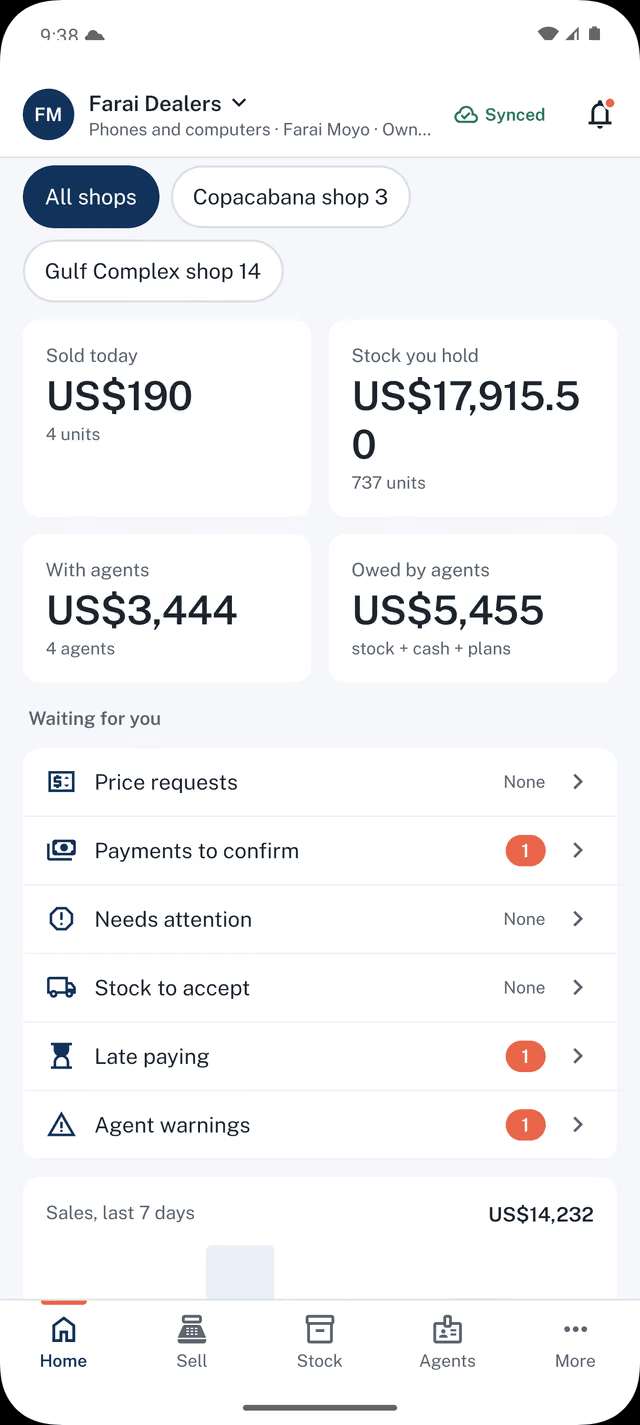
Why busy businesses lose sight of their money
Takings are easy to see. The cash drawer fills, EcoCash messages arrive, agents send money. What is harder to see is how much of that money is already spoken for.
- Deposits belong to customers until they collect, but they sit in the same drawer as sales.
- The price on the shelf often leaves out freight, duty, clearing and transport, so some sales make less than they seem to, and some lose money.
- Discounts given at the counter or on the street rarely make it into the book.
- Cash held by agents and balances owed on lay-bys look like money you have, until they don't arrive.
- Stock that doesn't move ties up money you could have spent on stock that does.
The records also arrive late and in pieces: one book per shop, a WhatsApp chat per customer, and whatever each agent remembers. By the time the totals are added up, the week has moved on.
This is common.
The FinScope MSME Survey Zimbabwe 2022 found that about one in five business owners keep up-to-date financial or accounting records, and about one in seven keep a business budget.1
Three ways dealers keep records today, and where each one stops
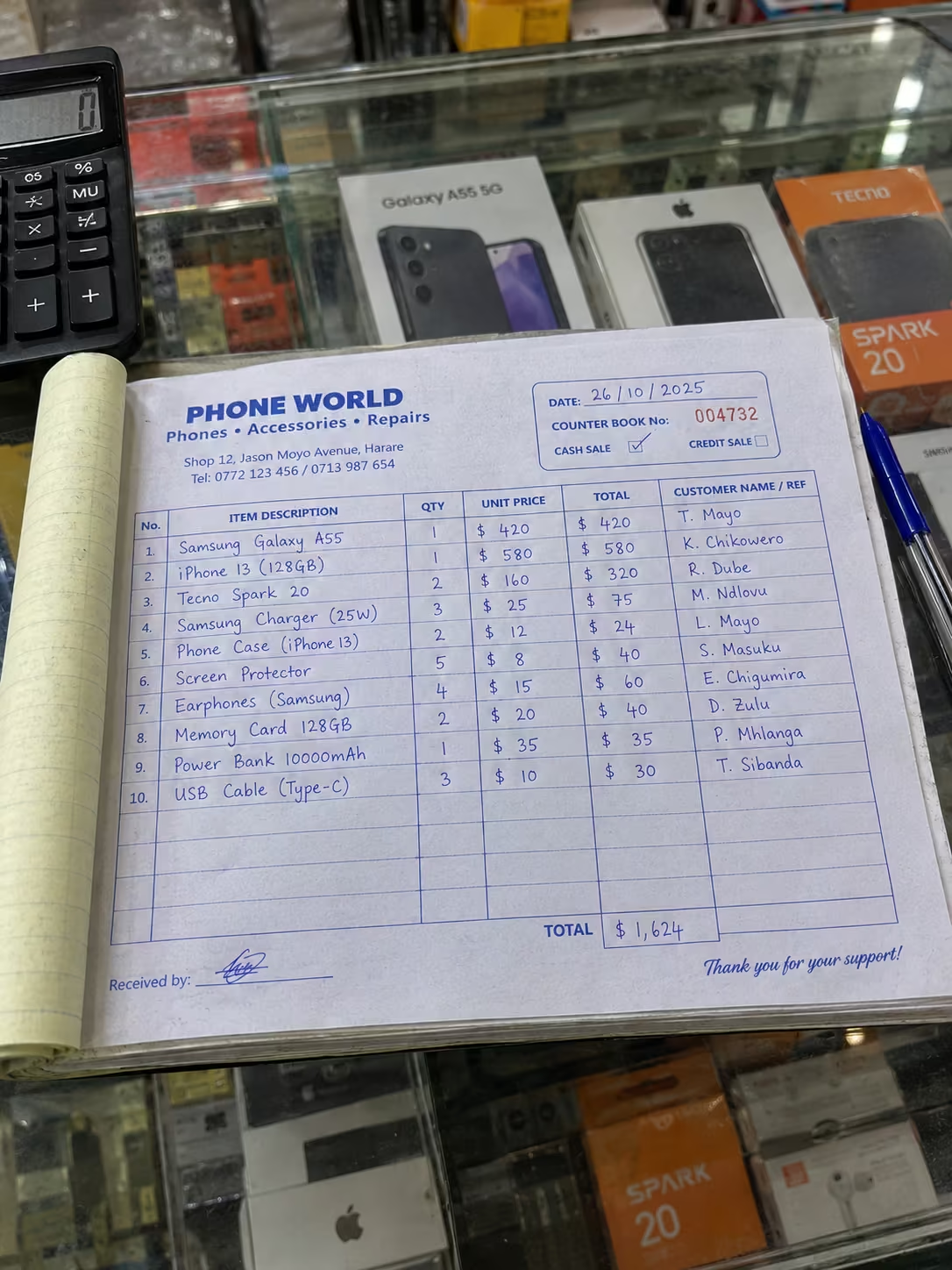
The counter book.
It is free and quick, needs no power or data, and everyone knows how to use it.
Where it stops
But it can't add up for you or be in two shops at once. It can't tell you which IMEI went to which agent, and pages get lost, torn or changed. Every total costs an evening.
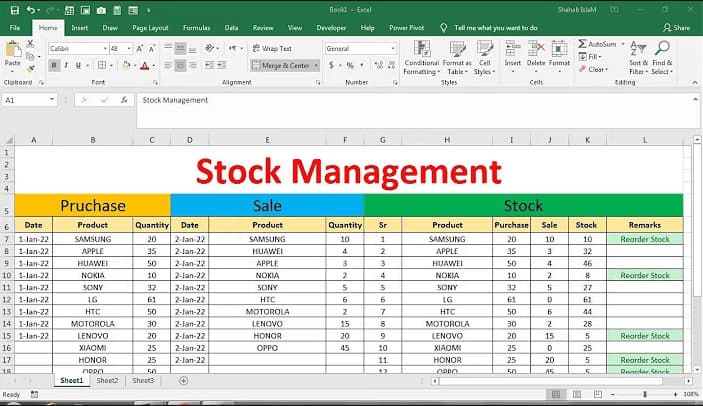
The spreadsheet.
It adds up, sorts and keeps totals.
Where it stops
But someone types everything twice, usually after closing. The file lives on one computer, so agents on the street and staff in other shops can't feed it as they sell. One broken formula can quietly change a total, and nothing shows who changed what.
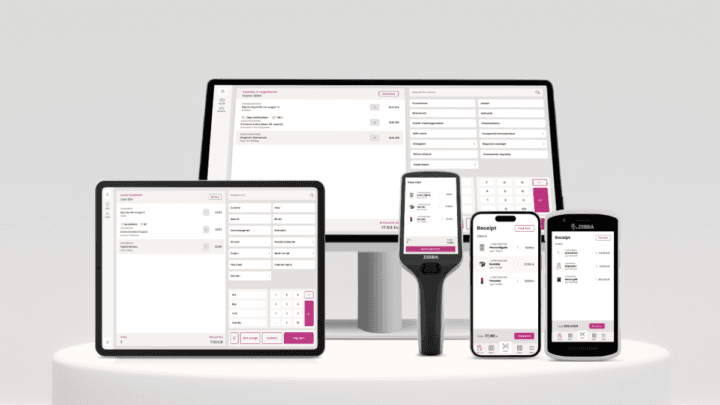
The general POS app.
It gives you a fast till, an item list and sales reports, and free POS apps such as Loyverse cost nothing for the till itself.
Where it stops
But a POS is built around the till in one shop, and extras are often charged per store or per person: Loyverse charges US$5 a month per store for sales history beyond 31 days, US$5 a month per employee for employee management, and US$25 a month per store for advanced inventory such as purchase orders and stock transfers.2 A till is also not built around stock that leaves with agents and comes back as cash, deposits on stock you don't have yet, payment plans whose dates move, or swaps checked by IMEI.
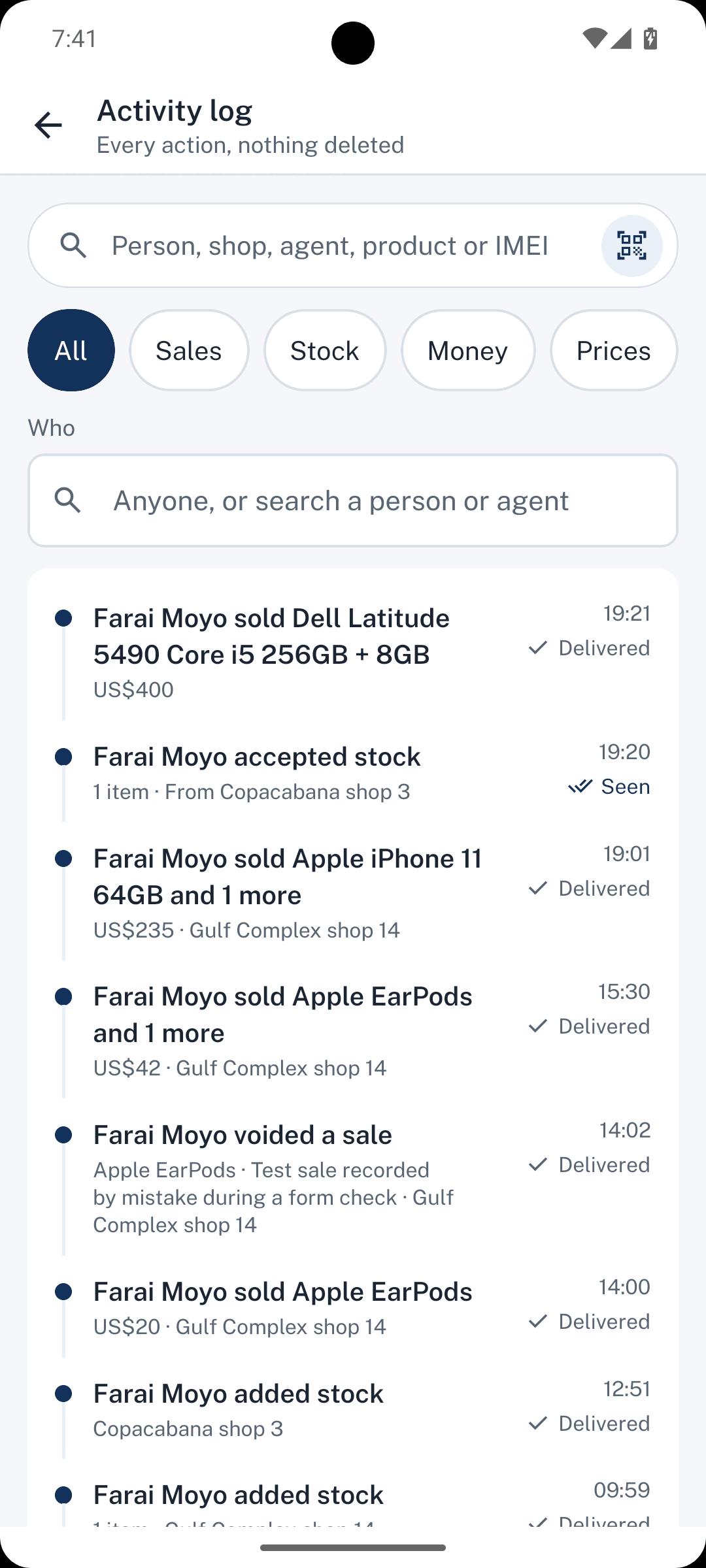
Dealpad sells like a POS at the counter, and each person's sales, shifts and hours come with the one plan. But it is built around stock that moves between people. That is the part of a dealer's business the other three can't see.
Nothing about how you work changes
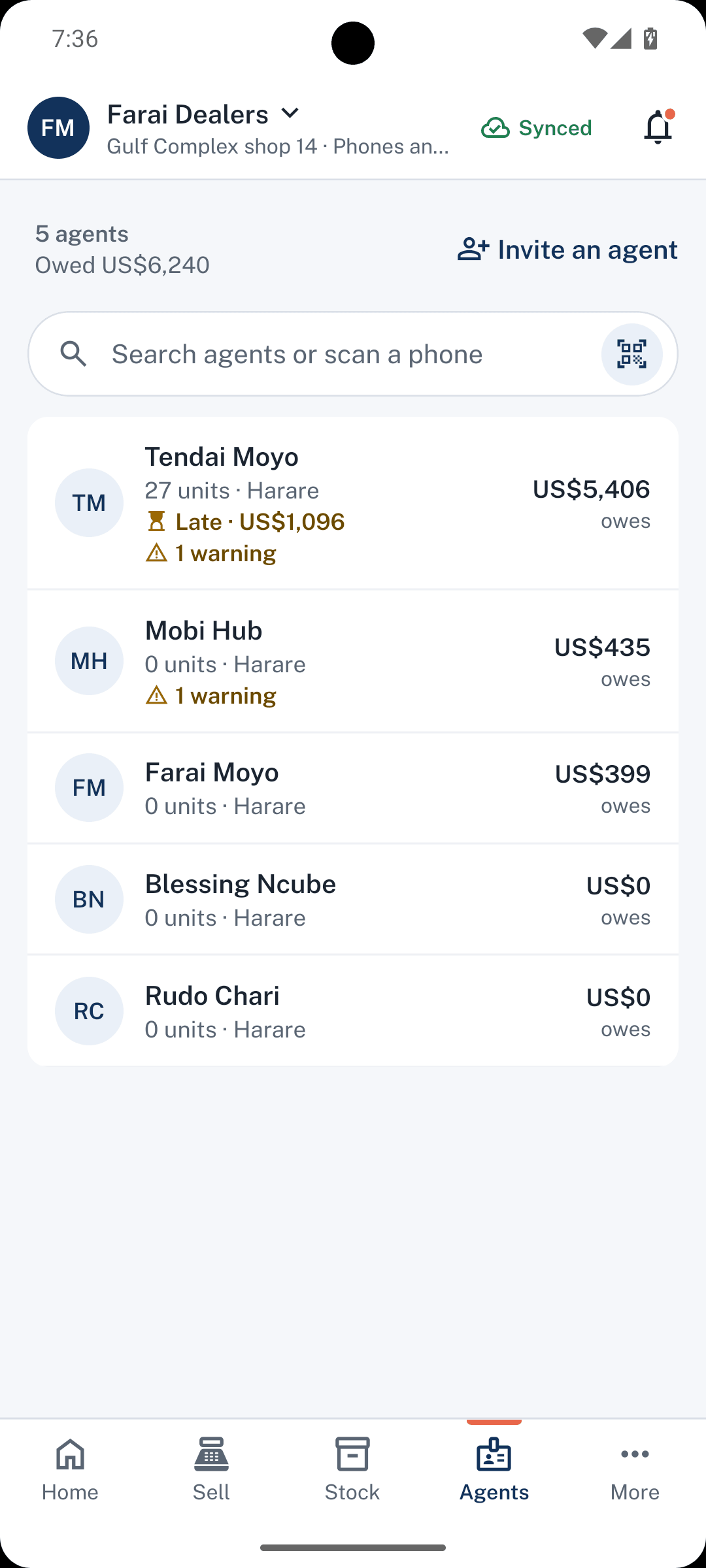
Dealpad keeps the books you already keep. It just writes them for you.
| The book you keep today | Where it lives in Dealpad |
|---|---|
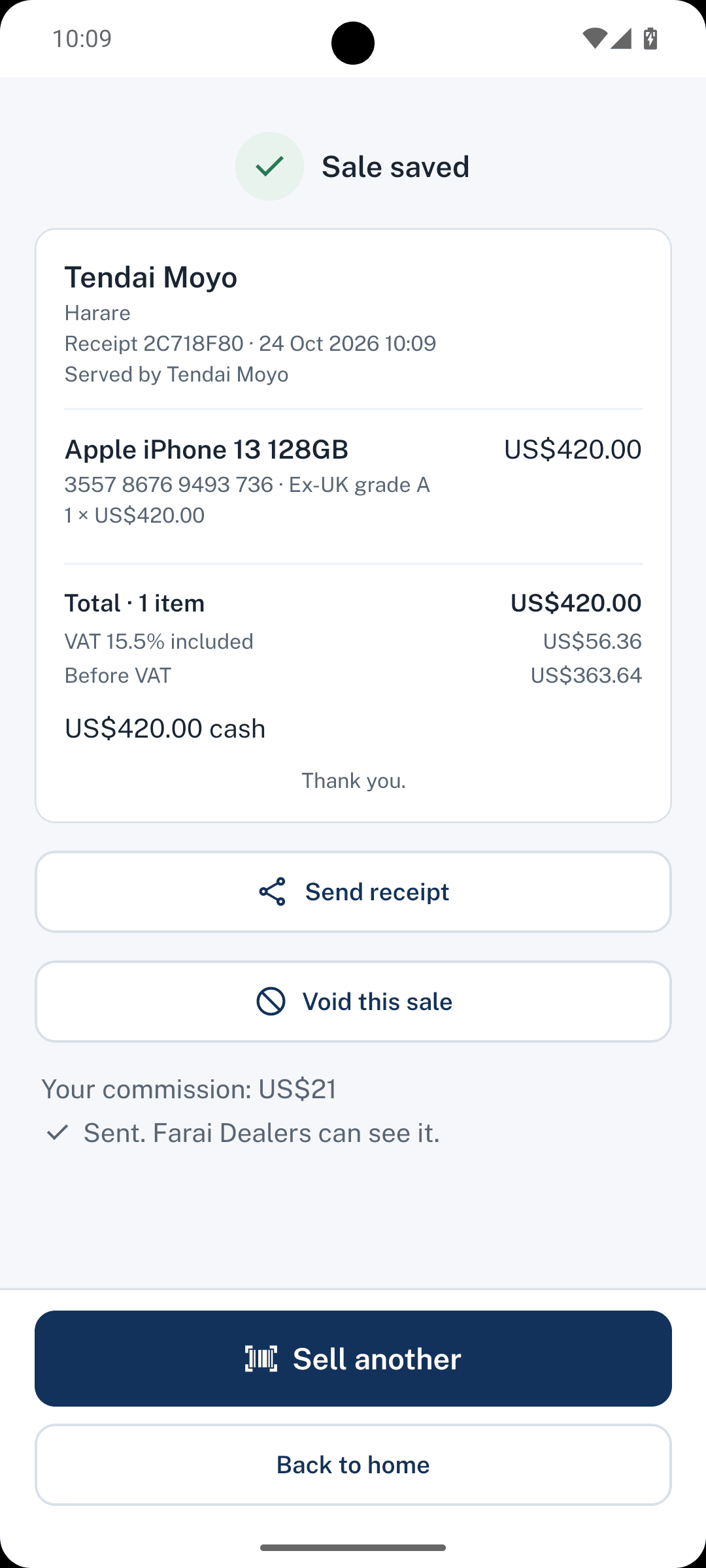
| The book you keep todayCounter book of sales | Where it lives in DealpadEach sale, with who sold it, where, and how it was paid |
| The book you keep todayStaff attendance register | Where it lives in DealpadHours clocked in and out within 50 metres of the shop, beside each person's shifts and sales |
| The book you keep todayThe copy side of your receipt book | Where it lives in DealpadThe sale record you keep, and a receipt you can send on WhatsApp |
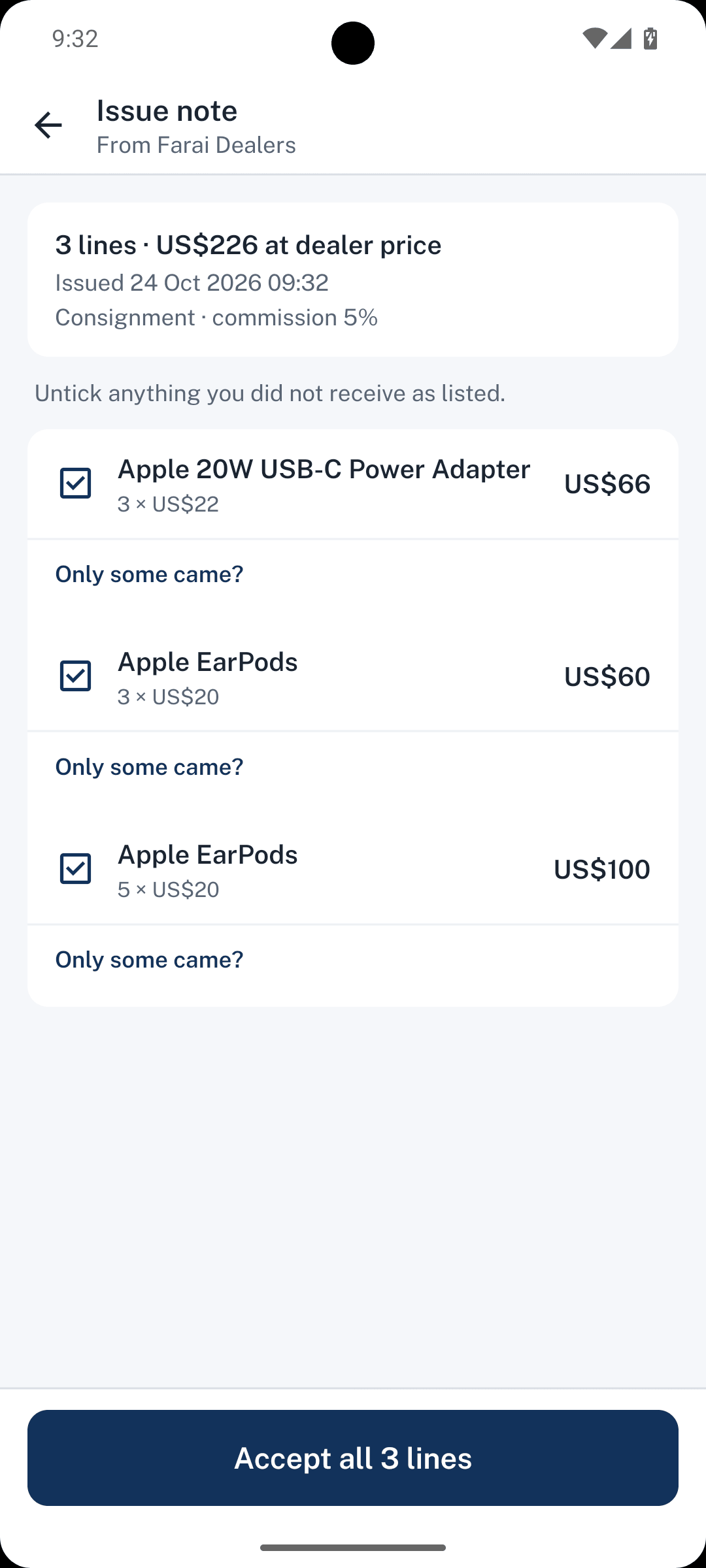
| The book you keep todayAgent stock book | Where it lives in DealpadIssue notes the agent accepts, and each agent's balance |
| The book you keep todayOrder book and deposits | Where it lives in DealpadOrders, deposits and the list of who is waiting |
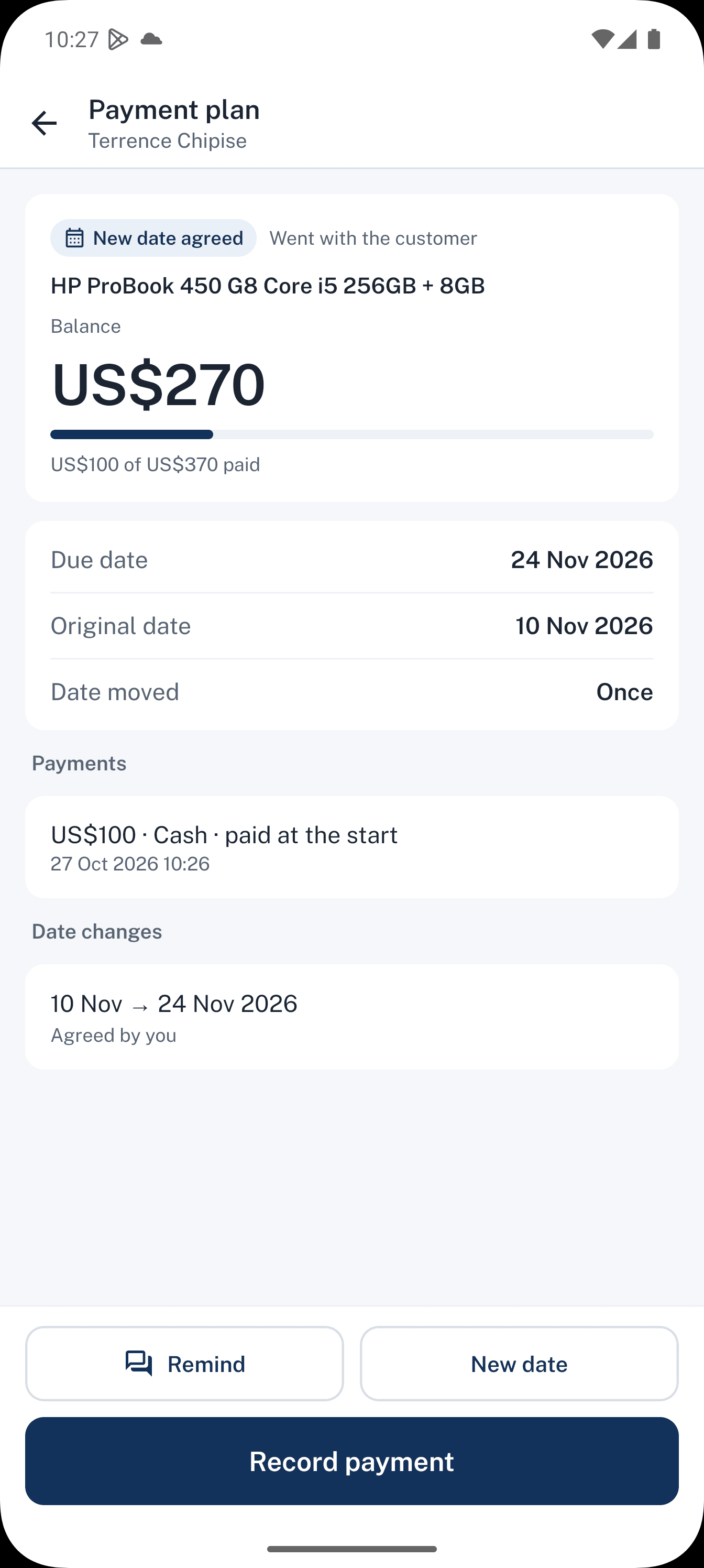
| The book you keep todayLay-by book | Where it lives in DealpadPayment plans with each payment and every change of date |
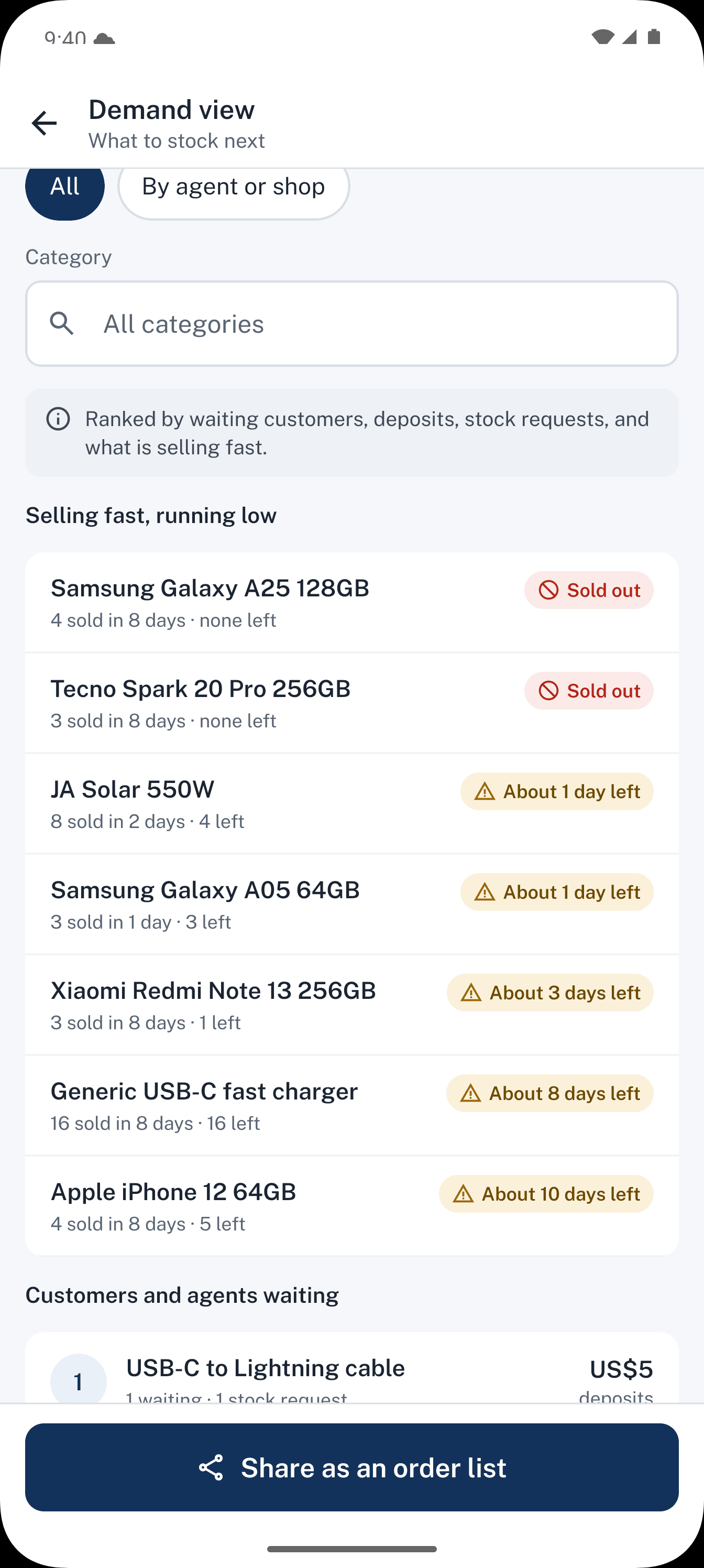
| The book you keep todayWhatsApp chats about who wants what | Where it lives in DealpadThe demand view, ranking what to buy next |
Time: what Dealpad takes, and what it gives back
These are illustrations, not measurements. The minutes are estimates for a typical dealer; change them to match your own business.
Adding 50 phones.
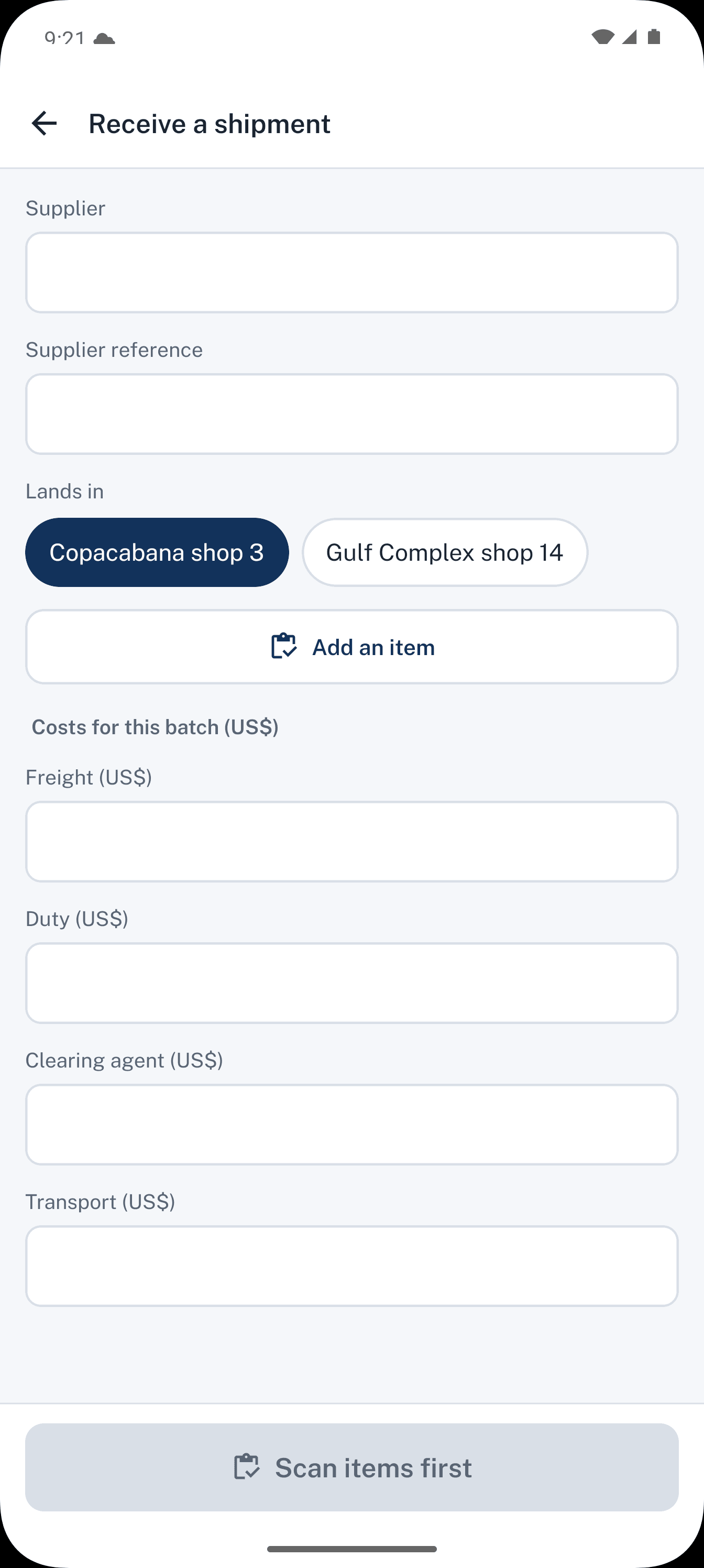
A shipment brings 50 phones in three models. In Dealpad you set up the three models once (about 3 minutes), scan the 50 IMEIs at about 4 seconds each (about 3 to 4 minutes), and add the shipment's costs (about 2 minutes): roughly 9 minutes. Not adding them takes no time at all. What those 9 minutes buy: every phone traceable by IMEI, a landed cost for each one, issues to agents by scan, returns checked against the real sale, and demand data for the next order.
Landed cost by hand.
Spreading freight, duty, clearing and transport across a mixed shipment with a calculator, then repricing, takes around 30 to 45 minutes each time, and one slip changes every price. Dealpad works it out as you enter the costs.
An example with illustrative figures: 50 phones bought at US$90 each cost US$4,500. Freight, duty, clearing and transport add US$450, which is US$9 a phone. Price them at US$105 believing you make US$15 a phone, and you actually make US$6. On the shipment you expect US$750 and earn US$300.
- 50 phones at US$90
- US$4,500
- Freight, duty, clearing, transport
- US$450
- Real cost of each phone
- US$99
- Price
- US$105
- You expect
- US$15 a phone · US$750
- You make
- US$6 a phone · US$300
The daily close, per shop.
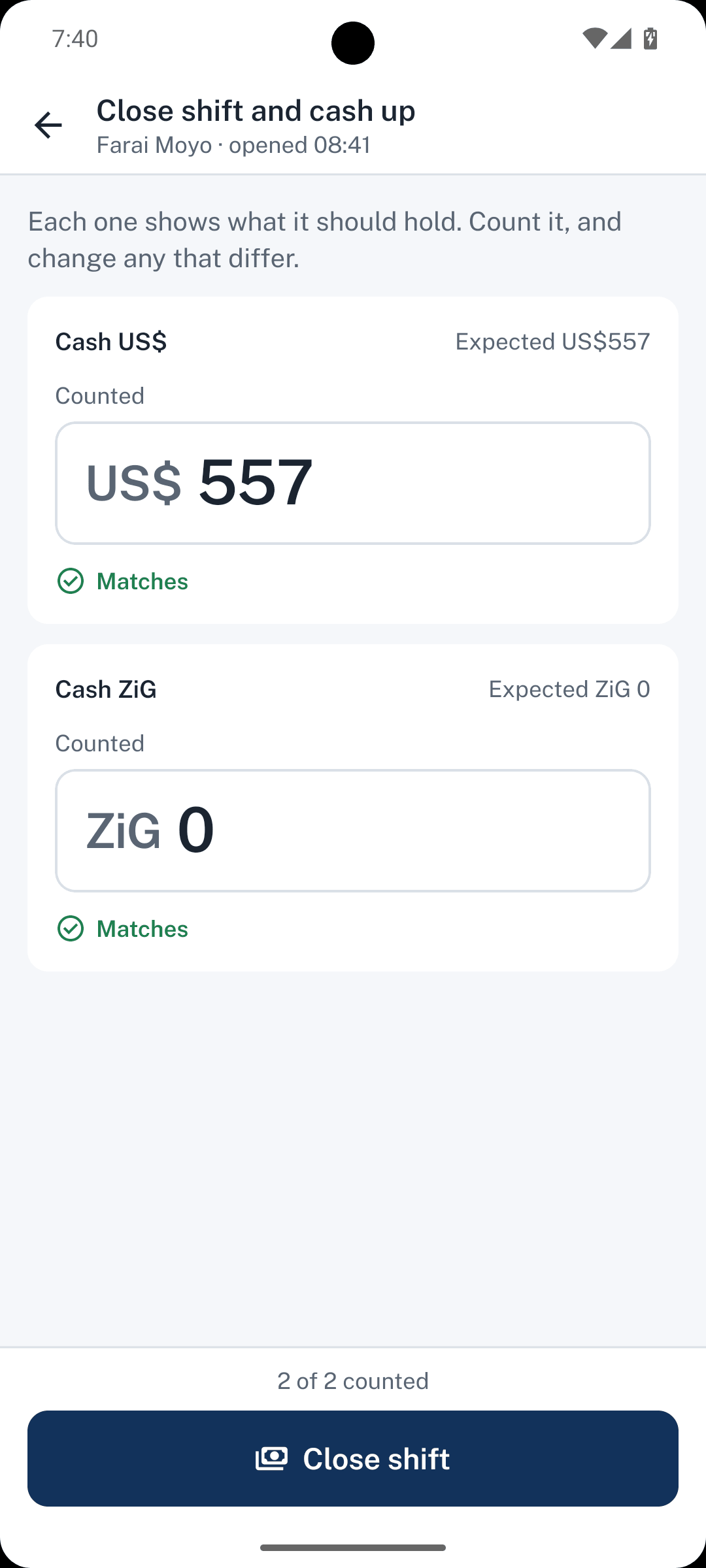
Adding up the day's sales, splitting them between US$, ZiG and EcoCash, counting the cash and checking stock takes around 30 to 45 minutes from a book. With Dealpad you close the shift knowing what should be in the drawer, and the count takes about 5 to 10 minutes. Saving 30 minutes a day over 26 trading days gives back 13 hours a month for each shop.
More than one shop.
Phoning or messaging each shop for its totals and adding them up again takes the owner around 15 minutes per shop each day. While shop phones are online, you see each shop's shifts, sales and trade-ins as they happen, and compare what each shop sold today, this week or this month, what it holds and who is on its till. That time disappears.
Agents.
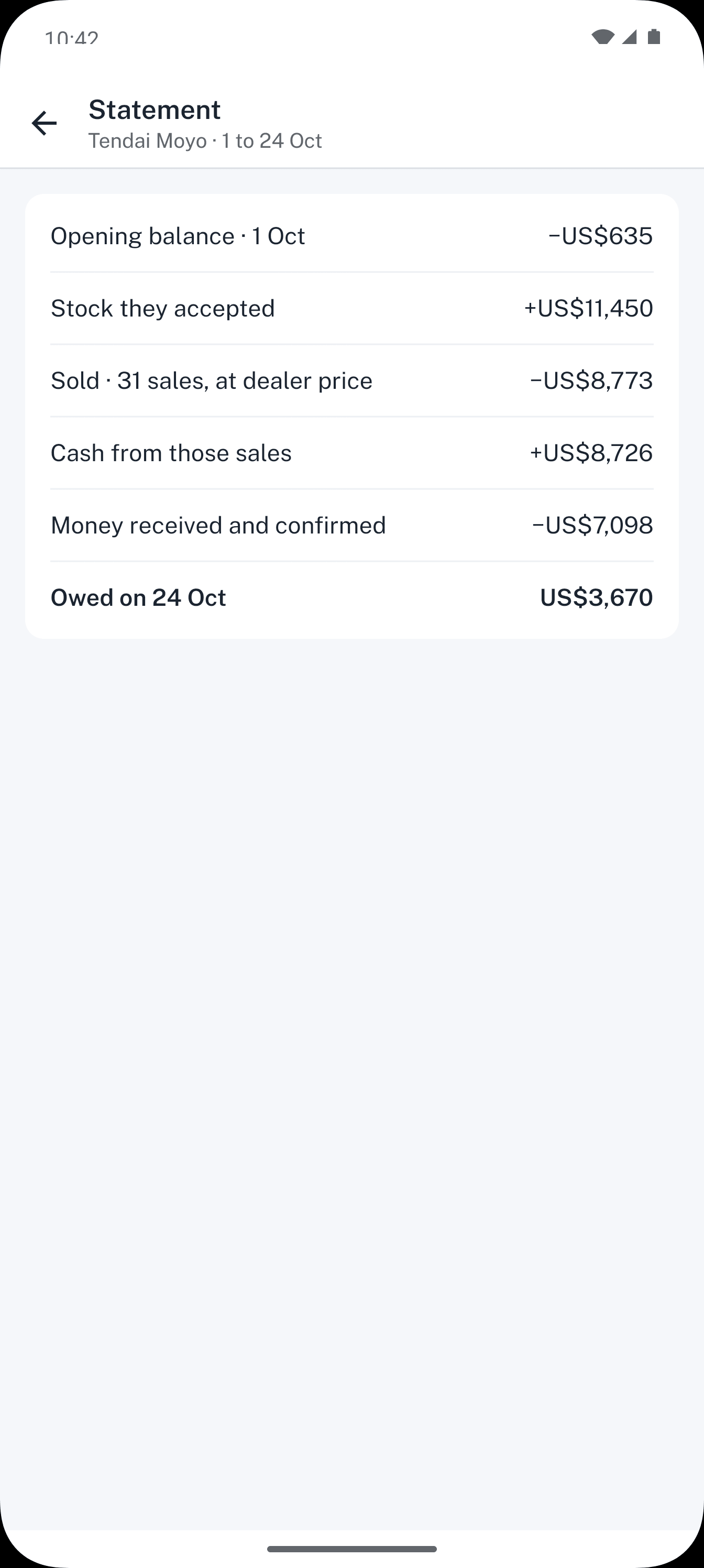
Settling with an agent from a notebook, matching what was given, sold and paid, takes around 25 minutes a week per agent, longer when there is a dispute. In Dealpad the statement is already there, and confirming payments as they arrive takes a couple of minutes.
Orders on WhatsApp.
When stock lands, scrolling back through chats to find who asked for what takes around 20 minutes a shipment, and some customers get missed. When the stock is received, Dealpad tells whoever took each order that it has arrived, and the WhatsApp message to the customer is already written.
Lay-bys and payment plans.
Going through a lay-by book to see who owes what, and settling arguments about dates and amounts, takes around an hour a month. Dealpad tells you which plans are due and which are overdue, with the history of each one.
Month-end books.
Reconciling each shop's book at month end takes around 4 hours a shop. With Dealpad the reports are already built, from sales by shop and by staff member to hours worked, and checking them takes about an hour.
One month for a dealer with 2 shops, 4 agents and 2 shipments (illustrative)
| By hand | With Dealpad | Time back | |
|---|---|---|---|
| Landed cost, 2 shipments | 80 min | 4 min | 1 h 16 min |
| Daily close, 2 shops for 26 days | 30 h 20 min | 4 h 20 min | 26 h |
| Collecting shop totals, 26 days | 13 h | none | 13 h |
| Agent settlements, 4 agents for 4 weeks | 6 h 40 min | 32 min | 6 h 8 min |
| Matching orders to stock, 2 shipments | 40 min | 5 min | 35 min |
| Lay-bys and payment plans | 1 h | 10 min | 50 min |
| Month-end books, 2 shops | 8 h | 1 h | 7 h |
| Total | about 61 h | about 6 h | about 55 h |
About 55 hours a month is close to seven 8-hour working days. A dealer with one shop and no agents still gets back around 18 hours a month, mainly from the daily close.
Work out your own month
Change the minutes
- By hand
- about 61 h
- With Dealpad
- about 6 h
An illustration from the minutes you enter. Nothing you type leaves this page.
Cost: a year of Dealpad against one phone
US$150
A year of Dealpad costs US$150 on the yearly plan. At recent Zimbabwean prices, that is about what you would pay for:
| Recent price in Zimbabwe | A year of Dealpad equals | |
|---|---|---|
| itel A70 | about US$90 to US$100 | about one and a half phones |
| Tecno Spark Go 1 | about US$80 | about two phones |
| Samsung Galaxy A06 | about US$95 to US$160, by storage and seller | about one to one and a half phones |
On a general POS, the tools for staff and for stock across shops are often sold as extras. At Loyverse's yearly prices, employee management is about US$50 a year for each employee and advanced inventory about US$250 a year for each store,2 so a dealer with two shops and four staff would pay about US$700 a year for those two. In Dealpad, each person's sales, shifts and hours, and each shop's sales, stock and transfers, come with the one plan at US$150 a year.
Keeping the US$150 can feel like keeping profit. Spent on Dealpad, the price of a phone or two lets you see where the money from every other phone goes. If Dealpad stops two budget phones going missing in a year, or catches one shipment priced below its real cost, it has paid for itself. Everything else, from the hours back each month to the agents you can trust with more stock, comes on top.
Phone prices vary by seller and storage and change often. Figures from Zimbabwean retailers and listings, checked November 2026.3
The money you don't see leaving
The money you see coming in is only half of the picture. The other half is the money leaving that nobody planned for: costs left out of a price, a discount nobody approved, cash that stayed in an agent's pocket, a swap valued too high, a deposit spent as if it were profit, a lay-by balance that was forgotten, a customer who left because their order was never written down. None of it shows on a busy day. All of it shows at the end of the year.
Dealpad doesn't change how you trade. It makes those losses visible while there is still time to act.
What Dealpad doesn't do yet
Dealpad does not issue fiscal or printed receipts yet, there is no iPhone app yet, and it records payments rather than taking them inside the app. It is for dealers in electronics and solar.
Put your next shipment into Dealpad and see where the money goes.
Scan it in, add its costs, and every sale after that is counted for you.
On iPhone? Dealpad for iPhone is on the way.
Message us on WhatsApp and we'll tell you when it's in the App Store.
Get notified on WhatsAppSources
- FinScope MSME Survey Zimbabwe 2022, topline findings, FinMark Trust.
- Loyverse pricing page, checked 2 November 2026.
- Phone prices from the Techzim shop, Alcore, Pindula and classifieds.co.zw listings, checked November 2026.